

What Is a Content Engineer? The Complete Guide to This Emerging Marketing Role in 2026
Introduction: The Rise of the Content Engineer
Content marketing isn't dying—it's evolving faster than most of us expected. If you've felt that sinking feeling watching AI churn out articles in seconds while you're still wrestling with your editorial calendar, you're not alone. But here's the twist: the real opportunity isn't in competing with AI. It's in becoming the person who orchestrates it.
Enter the content engineer—a hybrid role that's transforming how organizations create, scale, and optimize content. Think of it as content marketing meets systems thinking meets technical know-how. These professionals design content workflows, build automated processes, and leverage AI tools without sacrificing quality or brand voice.
In 2026, companies aren't just hiring writers anymore. They're seeking strategists who can turn content production into a repeatable, scalable system.
This guide will walk you through everything you need to know about content engineering: what it actually entails, the skills you'll need, how to transition into the role, and why it might be the career evolution you've been searching for.
What Is a Content Engineer? Definition and Role Overview
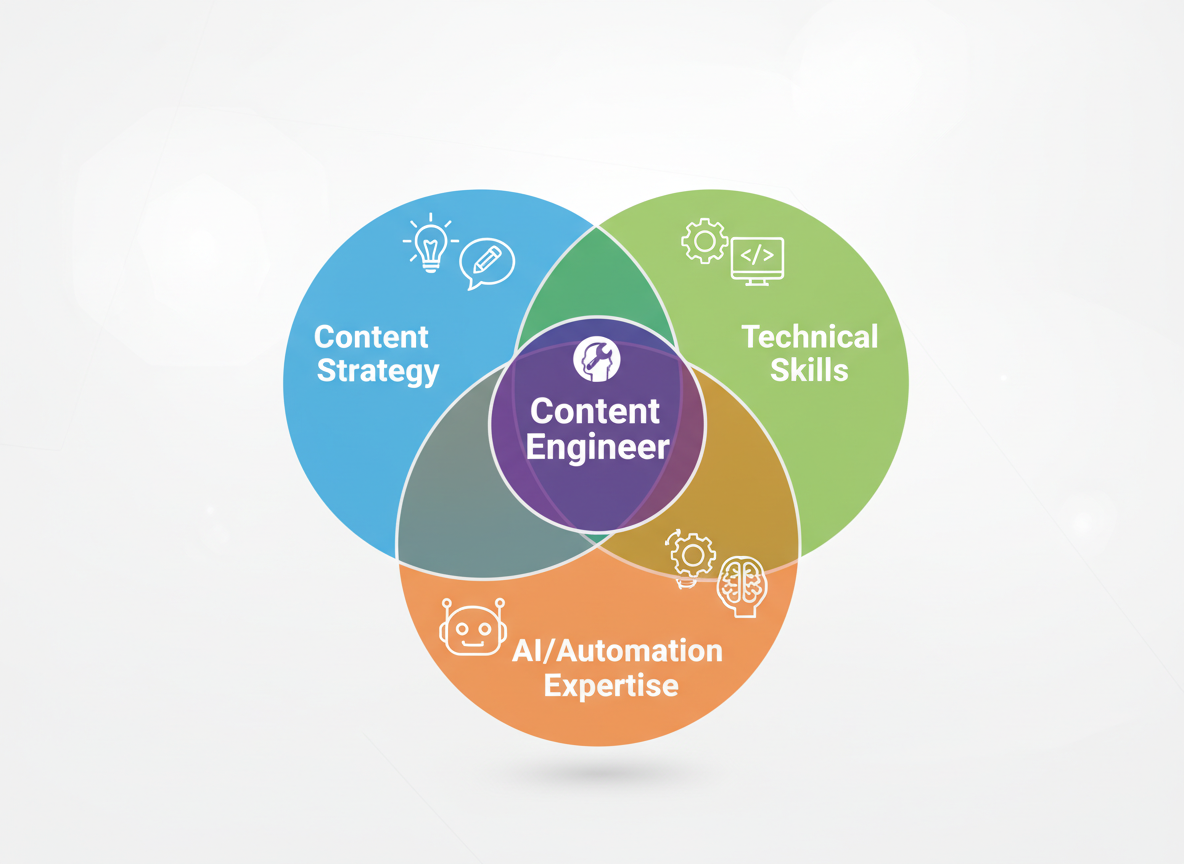
A content engineer is a hybrid marketing professional who combines content strategy expertise with technical implementation skills to orchestrate AI-powered content systems at scale. Think of them as the architect and conductor of your brand's content production line—they don't just create content, they build the systems that create content.
This role emerged from a fundamental shift in how we produce marketing materials. Traditional content marketers focus on writing, editing, and publishing individual pieces. Content engineers, however, design workflows where AI agents handle content production while humans maintain strategic oversight and brand integrity.
The evolution happened fast. As AI-powered content automation became sophisticated enough to generate blog posts, social media updates, and video scripts, someone needed to manage these systems. Content engineers fill that gap.
Their core responsibilities include:
- Orchestrating AI agents for different content tasks
- Building and optimizing content production workflows
- Ensuring brand consistency across automated outputs
- Bridging the gap between marketing strategy and technical execution
They're not replacing writers—they're multiplying what's possible. A single content engineer can manage systems producing hundreds of pieces monthly, something impossible for even the largest traditional content teams. It's the difference between fishing with a single rod versus managing an entire fleet.
Content Engineer vs. Related Roles: What's the Difference?
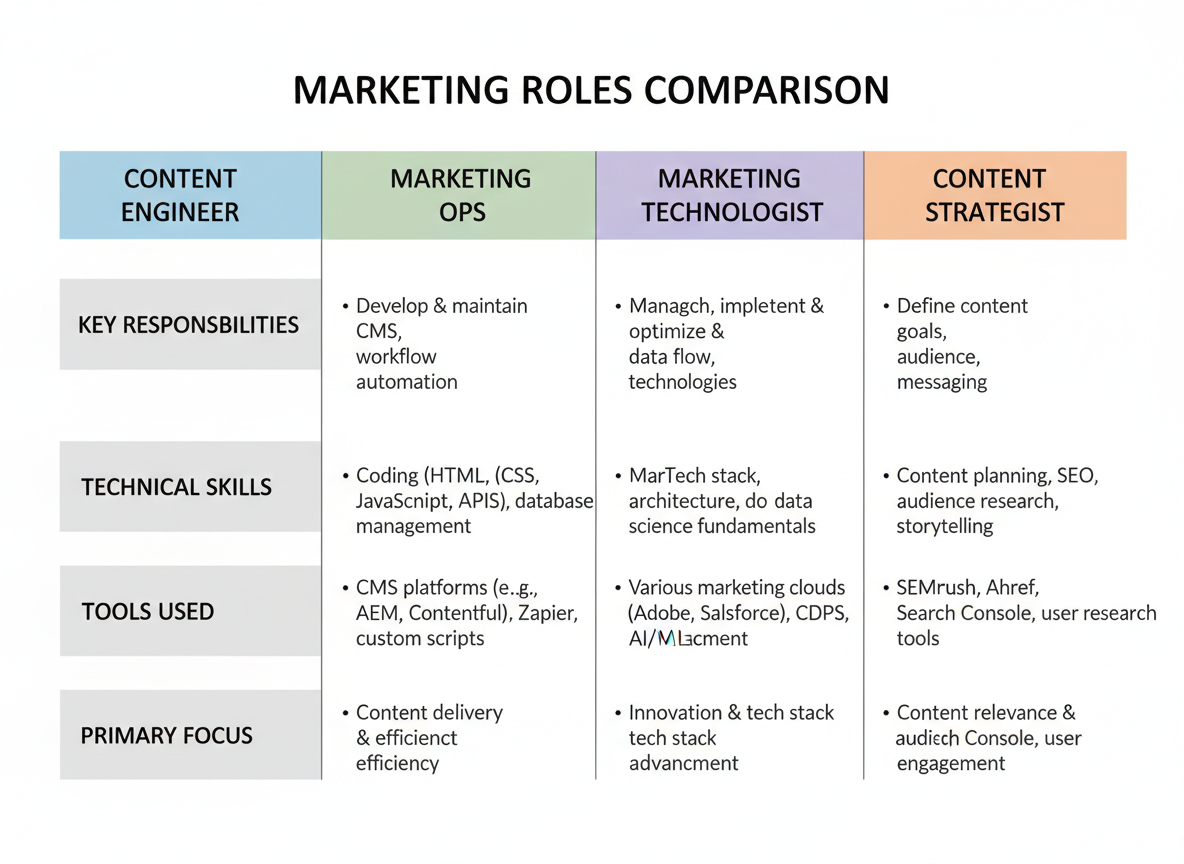
Here's where things get interesting. A content engineer isn't just a content strategist who learned to code, nor a marketing ops specialist with writing skills.
Content engineers build systems that produce, distribute, and optimize content at scale. They're architects focused on automation and workflow design.
Marketing ops specialists manage the broader marketing technology stack—CRM systems, analytics platforms, campaign workflows. They're less focused on content specifically.
Marketing technologists implement and manage marketing tools across departments. Think of them as IT for marketing, but they're not usually hands-on with content creation or strategy.
Traditional content strategists plan what to create and why, but they typically don't build the technical systems to automate it.
When do you need a content engineer? When you're drowning in manual content tasks, scaling your output, or managing content across multiple channels and languages. If you're still publishing one blog post at a time, you probably don't need one yet. But if you're running 500+ pieces of content monthly across different platforms? That's their sweet spot.
Four Ways Content Engineering Transforms Marketing Operations
Content engineers don't just make marketing faster—they fundamentally reshape how organizations produce and distribute content. Here's how they're changing the game.
Automated content production at scale means generating hundreds of pieces monthly while maintaining brand voice. One e-commerce company increased output from 20 to 300 product descriptions weekly after implementing content engineering systems.
Multi-agent orchestration handles complex workflows autonomously. Instead of manually coordinating writers, editors, and designers, content engineers build systems where AI agents collaborate seamlessly. This cuts production time by 60-75%.
Real-time brand safety and governance ensures every piece aligns with guidelines automatically. No more late-night panic about off-brand messaging—these systems catch issues before publication through automated content publishing workflows.
Data-driven optimization happens continuously, not quarterly. Content engineers create feedback loops that adjust headlines, CTAs, and formats based on performance. Marketing teams see engagement rates climb 40-85% within months.
The transformation isn't about replacing creativity—it's about amplifying what your team can accomplish.
Essential Skills and Technical Stack for Content Engineers
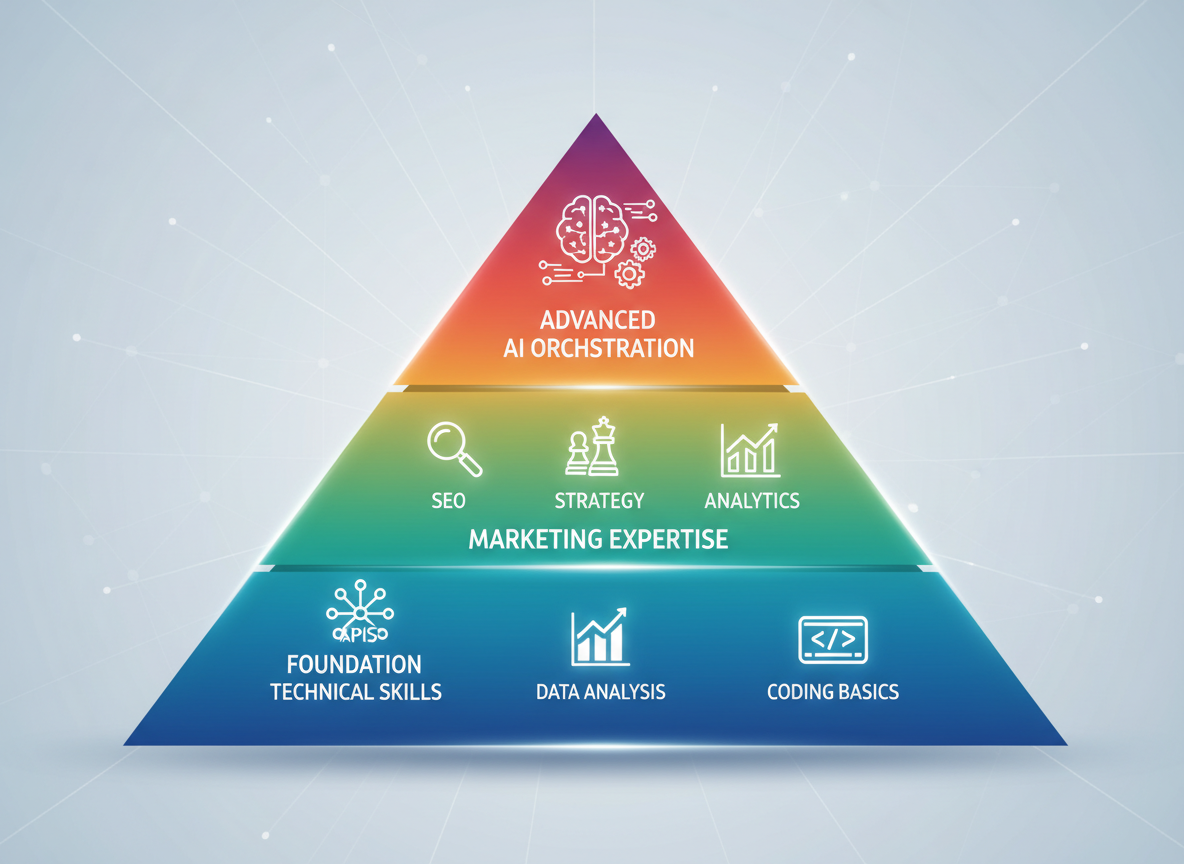
A content engineer blends technical prowess with marketing savvy, creating a unique skill set that's increasingly valuable.
On the technical side, you'll need proficiency in API integration to connect various content systems, basic data analysis to interpret performance metrics, and workflow automation to streamline repetitive tasks. Prompt engineering has become non-negotiable—knowing how to extract the best results from AI tools separates amateurs from professionals.
The marketing foundation matters just as much. Strong SEO optimization skills help you ensure content ranks, while content strategy expertise guides what gets created and when. You'll measure performance constantly, using analytics to refine your approach.
Required skills include content management systems (WordPress, Contentful), automation platforms (Zapier, Make), and AI tools (ChatGPT, Claude, Gemini). You should understand Google Analytics and basic prompt engineering.
Preferred additions might include coding knowledge (Python, JavaScript), advanced marketing automation, and experience with specialized AI platforms.
The good news? You don't need a computer science degree. Most successful content engineers started with strong writing skills and added technical capabilities over time.
How to Become a Content Engineer: Your Step-by-Step Career Roadmap
The path to becoming a content engineer isn't one-size-fits-all. Your starting point depends on where you are now.
Assess Your Current Position
If you're a content marketer, you've already got the strategic foundation. You understand audiences, SEO, and messaging—now you'll layer on technical skills. If you're a developer, you'll need to strengthen your content strategy muscles. Hybrid professionals? You're halfway there.
Phase 1: Build Foundational Technical Skills (3-6 months)
Start with HTML, CSS, and basic JavaScript. You don't need to become a full-stack developer, but understanding how content lives on the web is essential. Learn Git for version control and get comfortable with markdown syntax.
Phase 2: Master AI Tools and Prompt Engineering (2-4 months)
Experiment with ChatGPT, Claude, and specialized content AI platforms. Focus on crafting prompts that produce quality output. This skill alone will set you apart.
Phase 3: Learn Workflow Automation (3-6 months)
Dive into Zapier, Make (formerly Integromat), and API basics. Understanding how systems talk to each other transforms you from content creator to content engineer.
Training Resources
Look into certification programs from HubSpot Academy, Google's Digital Marketing courses, and LinkedIn Learning's automation tracks. Build a portfolio showcasing automated workflows, AI-powered content systems, and scalable processes you've designed.
A Day in the Life: What Content Engineers Actually Do
Sarah's morning starts at 8 AM, coffee in hand, checking her content automation platform dashboard. She scans performance metrics from overnight—conversion rates, engagement scores, and AI-generated content quality flags. One automated workflow flagged a 15% drop in email open rates, so she dives in.
By mid-morning, she's tweaking AI agent prompts. That email workflow? The subject lines got too salesy. She adjusts the temperature settings and adds context about the target audience's pain points. She runs A/B tests on three new variations.
After lunch, Sarah meets with the marketing team. They're planning a product launch, and she maps out an automated content workflow that'll handle everything from blog posts to social snippets. She's already thinking about how to structure the prompts and set up approval gates.
The afternoon's spent building that workflow in practice—connecting tools, setting triggers, and testing outputs. She's part strategist, part technician, part creative director. Every decision impacts content at scale.
Content Engineer Salary, Career Growth, and Job Market Outlook
Content engineers earned between $65,000-$95,000 in 2026 for entry-level positions, with mid-level professionals commanding $95,000-$135,000. Senior content engineers and directors pull $135,000-$180,000+, especially in tech hubs like San Francisco, New York, and Austin. Remote positions typically offer 10-15% less but open opportunities across geographic boundaries.
Career progression follows a clear path: Junior Content Engineer (1-2 years) → Content Engineer (3-5 years) → Senior Content Engineer (5-8 years) → Lead Content Engineer or Content Engineering Manager (8+ years). Some transition into product management or marketing technology leadership.
The job market's heating up. Tech companies, SaaS platforms, and enterprise marketing teams are hiring most aggressively, with healthcare, finance, and e-commerce close behind. LinkedIn shows 127% growth in content engineer postings since 2024. Remote opportunities make up roughly 60% of available positions, letting you work from anywhere while earning competitive rates.
Key Metrics and KPIs Content Engineers Should Track
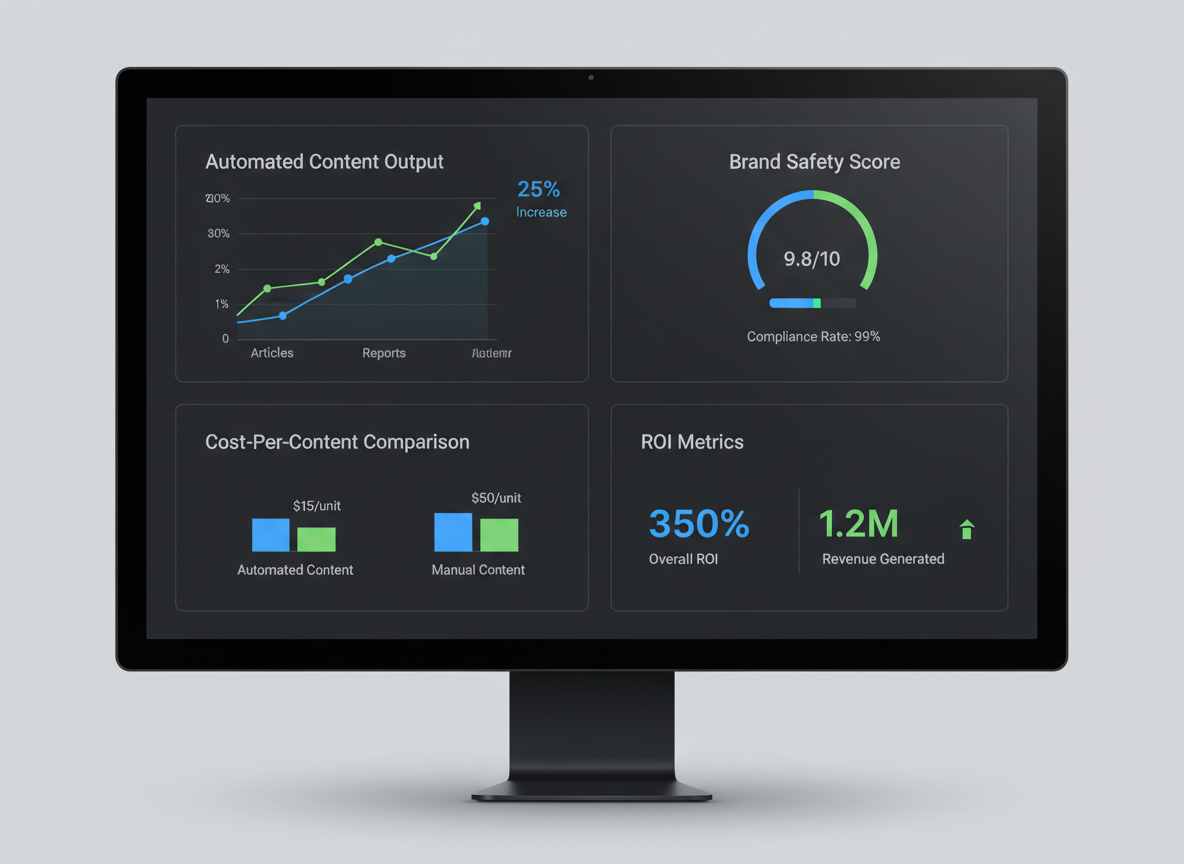
As a content engineer, you'll need visibility into both technical performance and business outcomes. Start with system metrics—automation uptime (aim for 99%+), content production volume, and publishing velocity. These tell you if your infrastructure's actually working.
Quality matters just as much. Track brand compliance scores, content accuracy rates, and editorial review pass rates. If you're sending 30% of automated content back for fixes, something needs adjustment.
Business impact connects your work to revenue. Monitor traffic, engagement rates, conversion percentages, and content ROI. Don't forget efficiency gains—time saved per piece, cost per asset, and overall team productivity.
Set up real-time dashboards using tools like Google Analytics, your CMS analytics, or dedicated platforms. Weekly snapshots work better than daily obsessing. Remember, metrics exist to improve your system, not judge your worth.
Common Challenges and How to Overcome Them
Even the best content engineers hit roadblocks. Here's how to navigate the most common ones.
Brand voice inconsistency often plagues AI-generated content. Solution? Create detailed style guides with actual examples, then use AI training prompts that reference your brand's specific tone. Think of it as teaching the AI your company's personality.
Integration headaches across martech stacks are real. Start small—connect two tools first, master that workflow, then expand. Most platforms offer native integrations that'll save you hours of custom coding.
Stakeholder resistance melts when you show results. Run a small pilot project, track time saved and content output, then present concrete numbers. Nothing convinces executives like a 300% productivity increase.
The automation-creativity balance needs guardrails. Reserve AI for research, outlines, and first drafts. Keep strategy, storytelling, and final polish human-led.
Skills gaps never truly close—you're always learning. Bookmark platforms like Coursera, LinkedIn Learning, and YouTube channels focused on marketing automation. Set aside 30 minutes weekly for upskilling.
Real-World Content Engineering Success Stories
SaaS startup StreamMetrics hired their first content engineer in early 2024. Within six months, they scaled from publishing 8 blog posts monthly to 80—without adding headwriters. The secret? Their content engineer built a template system that automated formatting, SEO optimization, and multi-platform publishing across their blog, LinkedIn, and YouTube. ROI: $180K saved in hiring costs, 340% increase in organic traffic.
Marketing agency BrightPath implemented a centralized content automation system serving 12 clients simultaneously. Their content engineer created reusable workflows that reduced production time by 67%. Each client now receives consistent, on-brand content across five channels. The result: 40 hours saved weekly, $8K additional monthly revenue from increased capacity.
Global retailer FashionForward struggled with brand consistency across 23 regional teams. Their content engineer deployed governance systems with automated brand checks and approval workflows. Publishing speed increased 3x while brand violations dropped 89%.
The pattern? Strategic systems beat brute force every time.
Content Engineer Job Description Template
Ready to hire your first content engineer? Here's a template you can customize for your team.
Role Overview: The content engineer designs and implements scalable content systems that bridge technical infrastructure and creative output, driving measurable performance improvements across all content channels.
Required Skills (Priority-Ranked): 1. Technical SEO and content optimization 2. CMS platform expertise (WordPress, headless CMS) 3. HTML/CSS proficiency 4. Data analysis and performance measurement 5. Content workflow automation
Preferred Skills:
- API integration experience
- Basic JavaScript knowledge
- Structured data markup
- Content personalization platforms
- AI tool implementation
Key Responsibilities:
Technical Implementation
- Design and maintain content production systems
- Implement SEO technical requirements
- Build automated workflows
Strategic Optimization
- Analyze content performance metrics
- Develop data-driven improvement strategies
- Create scalable processes
Cross-functional Collaboration
- Partner with developers, designers, and writers
- Document technical processes
- Train team members on new systems
Success Metrics: Organic traffic growth, content production velocity, technical SEO scores, conversion rate improvements, and system efficiency gains.
The Future of Content Engineering: What's Next?
Content engineers who adapt now will lead the pack in 2026 and beyond. Multi-modal content—blending text, video, and audio into cohesive experiences—isn't just trendy anymore. It's expected.
AI agents are getting smarter, handling content distribution and optimization autonomously. This means content engineers will shift from manual execution to strategic oversight, training systems rather than just operating them.
AEO optimization is becoming as essential as traditional SEO. Search engines are evolving into answer engines, and content engineers who master structured data, entity relationships, and conversational queries will have a massive advantage.
The next 2-3 years will separate early adopters from those playing catch-up. You'll need fluency in AI workflows, data interpretation skills, and the ability to bridge technical and creative teams. Those who embrace these changes won't just survive—they'll define what content engineering becomes.
Frequently Asked Questions
Do I need to know how to code to become a Content Engineer?
No, but basic technical literacy helps. You'll need to understand APIs, work with tools like Zapier or Make, and possibly learn simple scripts. Think of it like learning Excel macros—useful, not intimidating.
How long does it take to transition into a Content Engineer role?
Most marketers make the shift in 3-6 months. If you're already familiar with content strategy and marketing automation, you're halfway there. The technical skills layer on top of what you already know.
What's the difference between content engineering and content marketing?
Content marketing focuses on strategy and creation. Content engineering builds the systems that scale that content across platforms automatically. You're architecting workflows instead of just writing posts.
Can Content Engineers work remotely?
Absolutely. Since the role revolves around digital tools and automation platforms, it's perfectly suited for remote work. Many companies hiring for this position offer fully remote options.
What industries need Content Engineers the most?
SaaS companies, digital agencies, e-commerce brands, and media publishers lead the pack. Any business producing high-volume content across multiple channels needs this skillset.
Is content engineering going to replace traditional content marketers?
Not replace—evolve. Traditional marketers who add engineering skills become more valuable. The human creativity and strategy remain essential; automation just amplifies their impact.
What certifications are most valuable for Content Engineers?
HubSpot's Marketing Automation, Google Analytics, and platform-specific certifications (like Zapier Expert) carry weight. But honestly, a portfolio of working automation systems impresses more than certificates.
How much does content automation software cost to implement?
Entry-level tools start around $50-100 monthly. Mid-tier platforms run $300-1,000. Enterprise solutions can exceed $5,000 monthly. Most businesses start small and scale based on ROI.