AI Movie Trailer Voice: The Complete Guide to Cinematic Voiceovers in 2026
Why AI Movie Trailer Voices Are Revolutionizing Content Creation
The voice that sold a billion-dollar blockbuster no longer needs a recording studio, a professional actor, or a five-figure budget.
In 2026, the ai movie trailer voice technology has shifted from experimental novelty to production-ready tool that's fundamentally changing how trailers, promos, and cinematic content get made. We're talking about AI systems that can deliver that deep, commanding "In a world..." resonance in seconds—without booking studio time or negotiating usage rights.
Here's what's actually happening: Marketing agencies that once quoted clients $2,000-$5,000 for professional trailer voiceovers are now producing the same quality for under $50. Freelancers who couldn't afford to offer video promotion services are suddenly competing with established production houses. And content creators are churning out multiple trailer variations in the time it used to take to schedule a single voice actor.
The numbers tell the real story. Traditional voice talent requires scheduling coordination, studio booking, multiple takes, revisions that cost extra, and licensing agreements. That's a minimum 3-5 day turnaround for most projects. AI movie trailer voices? You're done in 15 minutes, with unlimited revisions and perpetual usage rights baked in.
This isn't about replacing human creativity. It's about speed, scale, and accessibility. You can test five different vocal approaches before lunch. You can offer trailer production services tomorrow without any existing industry connections. You can say yes to rush projects that you'd normally have to turn down.
In this guide, you'll discover exactly how to leverage AI movie trailer voice technology to add a high-margin service to your business, cut production costs dramatically, and deliver client work faster than your competition can return an email. The window for early adoption advantages won't stay open forever—but right now, it's wide open.
What Is AI Movie Trailer Voice Technology?
AI movie trailer voice technology uses machine learning to create those deep, dramatic voiceovers you'd expect from a Hollywood blockbuster—without booking a studio or hiring a voice actor.
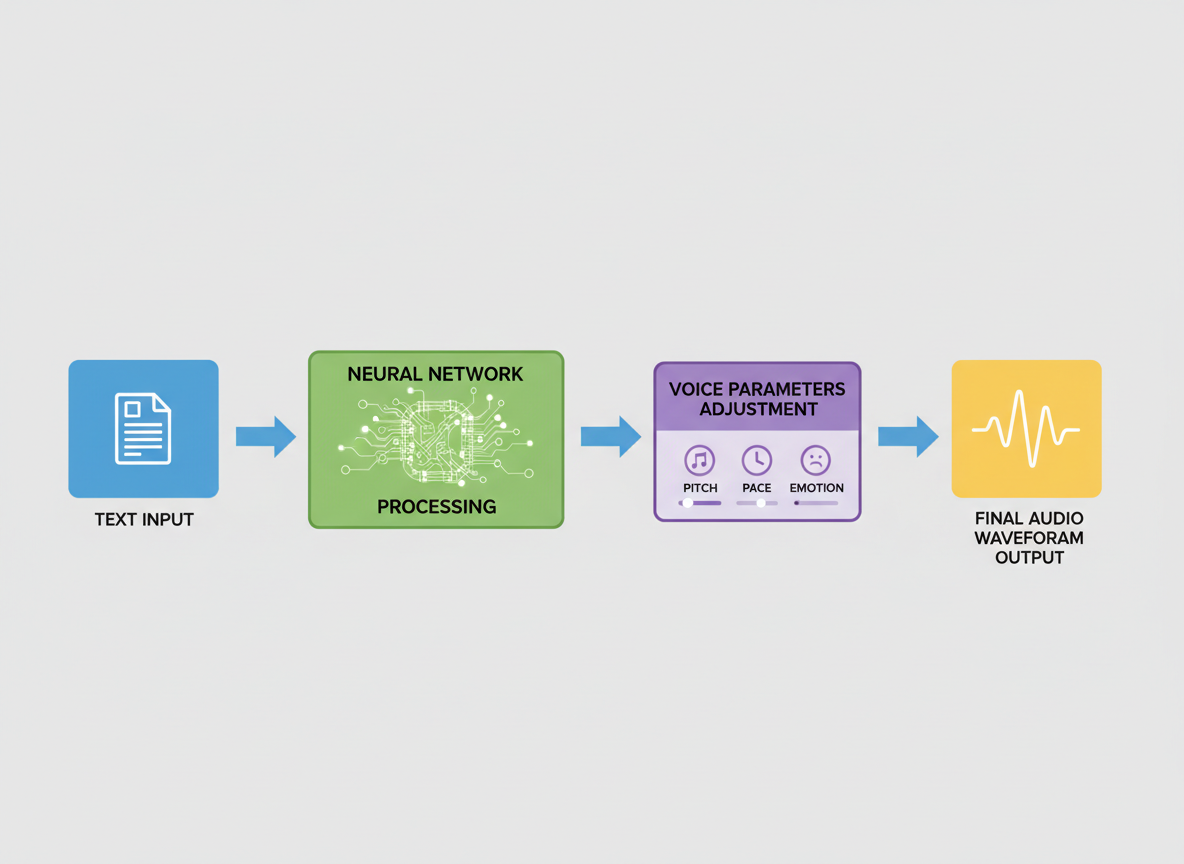
Here's what's happening under the hood: neural networks analyze thousands of hours of human speech patterns, learning the subtle inflections, pacing, and tonal qualities that make trailer voices so distinctive. These systems break down everything from breath control to emotional intensity, then reconstruct it through text-to-speech synthesis.
But we're not talking about your GPS navigation voice here.
Modern AI voice synthesis has evolved light-years beyond the robotic text-to-speech tools from five years ago. Voice cloning technology can now capture the gravitas and emotional range that makes audiences lean forward in their seats. The tech identifies pitch variations, speech cadence, and even those micro-pauses that create tension.
The difference between generic AI voices and specialized trailer voices? It's massive. Generic voices sound pleasant enough for customer service bots or audiobook narration. Trailer voices need to command attention, build anticipation, and sell an entire story in thirty seconds. They require that "in a world" quality—a cinematic presence that makes viewers feel something.
Companies like ElevenLabs have pushed this technology to the point where distinguishing AI from human recordings isn't just difficult—it's often impossible. Their models capture emotional nuance and dramatic emphasis that actually sells. You're getting broadcast-quality results from a web interface.
Why should you care about this right now?
Because the market's moving fast, and agencies are already charging premium rates for AI-generated trailer content. Freelancers who add this skill to their arsenal can command anywhere from $500 to $2,000 per project. Marketing agencies can offer cinematic voiceovers as a standalone service or bundle them with video production packages.
Content creators are producing higher-quality promotional material without the traditional budget constraints. No more waiting weeks for voice talent availability or paying $300+ per hour for studio time. You're delivering client projects faster while maintaining margins that actually make sense.
The technology's already here. The question isn't whether AI movie trailer voice will transform how content gets produced—it's whether you'll be positioned to profit from it before the market saturates.
The Best AI Voice Options for Movie Trailer Narration (2026 Comparison)
Let's cut through the noise—not every AI voice platform can deliver that spine-tingling, seat-gripping quality you need for movie trailers. The market's exploded in 2026, but only a handful of platforms actually sound cinematic enough to charge premium rates for your services.
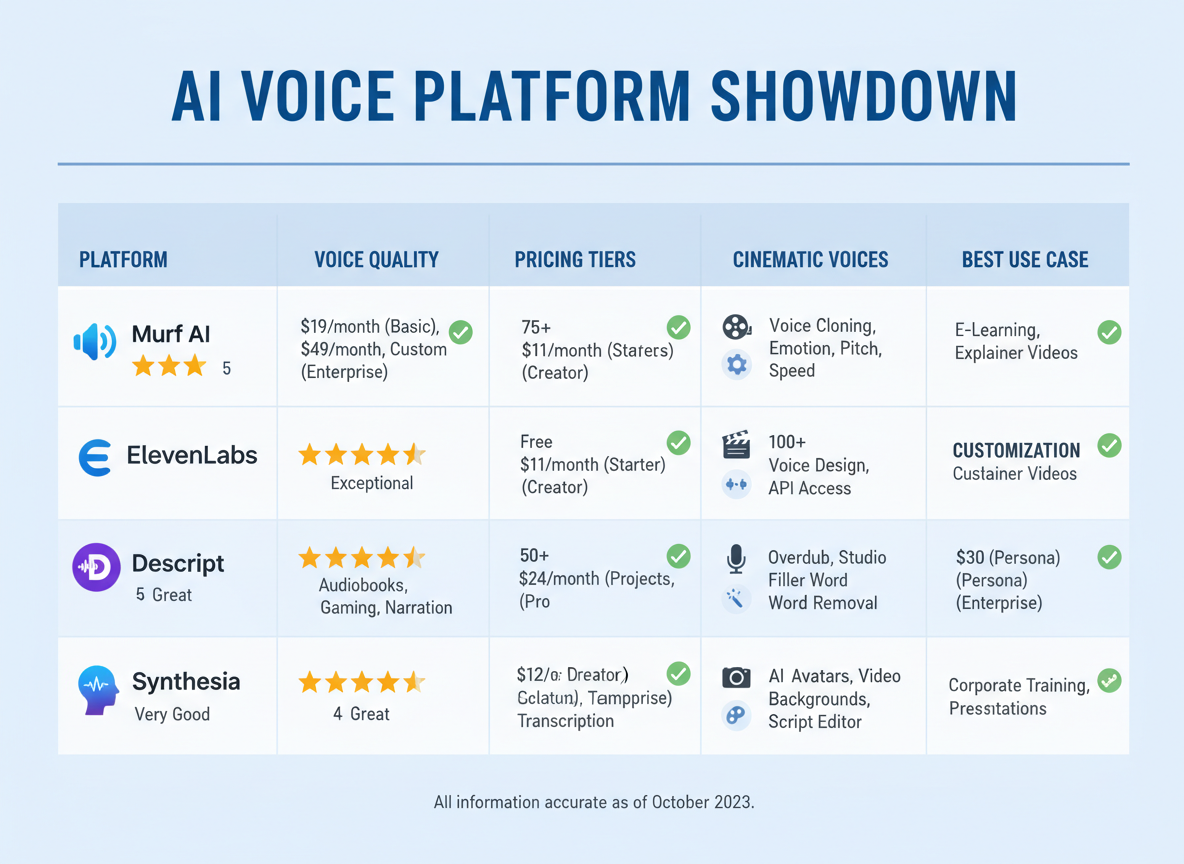
ElevenLabs dominates the trailer space right now, and for good reason. Their voice library includes "Marcus" and "Adam," which have become go-to options for action and thriller trailers. Marcus delivers that classic deep, authoritative rumble that makes audiences lean forward in their seats. Adam's got more versatility—he can shift from mysterious whispers to full dramatic crescendos without sounding robotic.
For horror and psychological thriller work, ElevenLabs' "Callum" brings an unsettling edge that's perfect for building tension. Meanwhile, "Drew" works beautifully for romantic dramas and indie film trailers where you need warmth mixed with gravitas.
Pricing and Access matter when you're building a service business around this technology. ElevenLabs starts at $5 for 30,000 characters monthly (about 30-40 standard trailers), with their Creator plan at $22 hitting the sweet spot for agencies running multiple client projects. Their Professional tier ($99) unlocks API access—that's when you can start scaling serious volume.
The API integration capability separates the hobbyists from the professionals. You'll want direct API access if you're processing multiple trailer projects weekly or building this into your agency's workflow automation. It's not just about convenience—it's about speed-to-market when clients need 24-hour turnarounds.
Murf AI offers solid alternatives with voices like "Ken" and "Terrell" that work well for documentary-style trailers and corporate film projects. Their pricing starts at $19 monthly, making them a decent backup option, though their emotional range doesn't quite match what you'll get from premium platforms. That said, for certain client budgets, they're perfectly adequate.
Quality Assessment by Genre
Action/Adventure: You need voices with strong bass frequencies and dramatic pacing control. ElevenLabs' Marcus and Adam dominate here.
Horror/Thriller: Callum's unsettling delivery creates that perfect sense of dread. Test the pacing features extensively—horror lives in the pauses.
Romance/Drama: Drew and softer voice profiles work best. You're looking for warmth without losing authority.
Documentary-Style: Ken (Murf AI) or ElevenLabs' Charlotte bring credibility without overselling.
Here's what most people miss: the ai voice over generator free options won't cut it for paying clients. Free tiers lack the voice cloning, emotional controls, and commercial licensing you need to legally deliver work. You'll spend more time wrestling with limitations than actually making money.
The platforms charging $20-100 monthly aren't expenses—they're leverage. One $500 trailer project covers months of premium access. That's not overhead, that's a rounding error on your profit margin.
Movie Trailer Voice Styles: Matching AI Voices to Your Genre
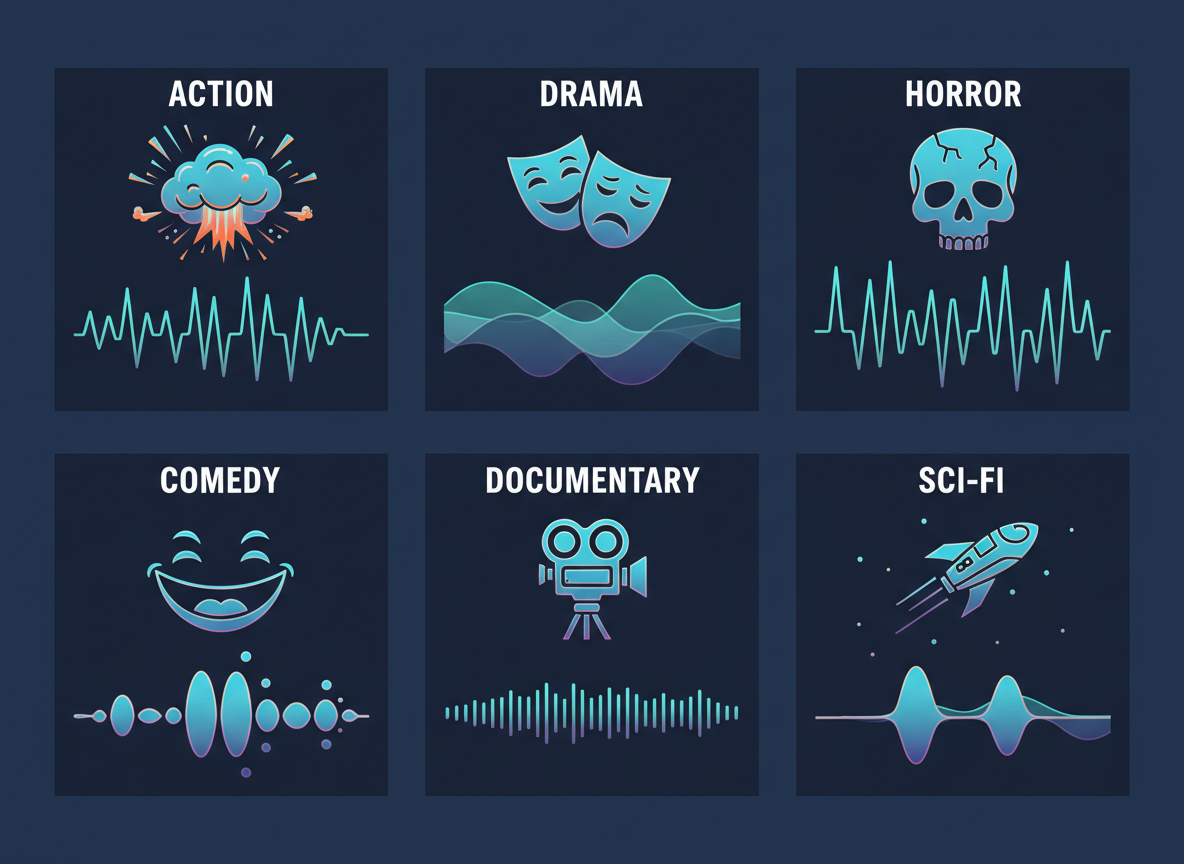
Getting the right voice for your trailer isn't just important—it's everything. Your clients won't pay premium rates for a sci-fi trailer that sounds like a late-night infomercial. Let's break down what actually works for each genre so you can deliver trailers that sell.
Action and Thriller: The Intensity Factor
You need power here. Think deep, resonant tones that build tension with every word. The best action trailer voices sit in the lower register—typically male voices between 85-165 Hz—with crisp consonants that punch through explosions and gunfire. Your AI voice should deliver phrases with controlled urgency, not breathless panic. Listen for clean articulation even at lower volumes, because your mix engineer will push these vocals hard against the sound design.
Drama and Emotional Stories: Connection Over Spectacle
Drama requires warmth that feels genuine. You're looking for mid-range voices that can carry emotional weight without sounding manipulative. The tempo slows down here—your AI voice needs natural pauses and subtle inflection changes. Test your voice selection by listening to how it handles quiet moments. If it can't sell silence between words, it won't sell your client's drama.
Horror: The Art of Dread
Forget the stereotype of whispering everything. Great horror trailer voices blend authoritative presence with atmospheric delivery. You want controlled darkness—voices that suggest menace without camp. Look for AI voices with excellent low-end stability and the ability to maintain character during slow, deliberate pacing. The best choices sit just above a whisper in volume but command full attention.
Comedy: Energy Without Exhaustion
Comedy trailers need brightness and momentum, but here's what most people miss: the voice can't try to be funny. You need upbeat, engaging delivery that sets up the jokes without stepping on them. Your AI voice should feel like it's smiling—audiences hear that. Higher energy levels work here, but watch for voices that sound frantic instead of enthusiastic.
Documentary Style: Credibility Sells
Authority matters more than personality in documentary trailers. You want clear, informative delivery with natural gravitas. The sweet spot sits in mid-range frequencies with neutral accent patterns. Test your AI voice with complex sentences—documentary copy often runs longer and needs sustained credibility.
Sci-Fi and Fantasy: Epic Scale
These genres demand grandeur. You're looking for voices with rich resonance and excellent dynamic range. The AI voice you choose needs to sound larger than life without becoming cartoonish. Deep doesn't always mean better here—clarity and presence at epic scale matter more.
Selection Strategy for Your Projects
Match your ai movie trailer voice to genre first, then client expectations. Request samples that mirror your script's emotional arc, not just isolated phrases. The voice that sounds perfect for fifteen seconds might fatigue listeners at ninety.
Step-by-Step: How to Create Professional AI Movie Trailer Voiceovers
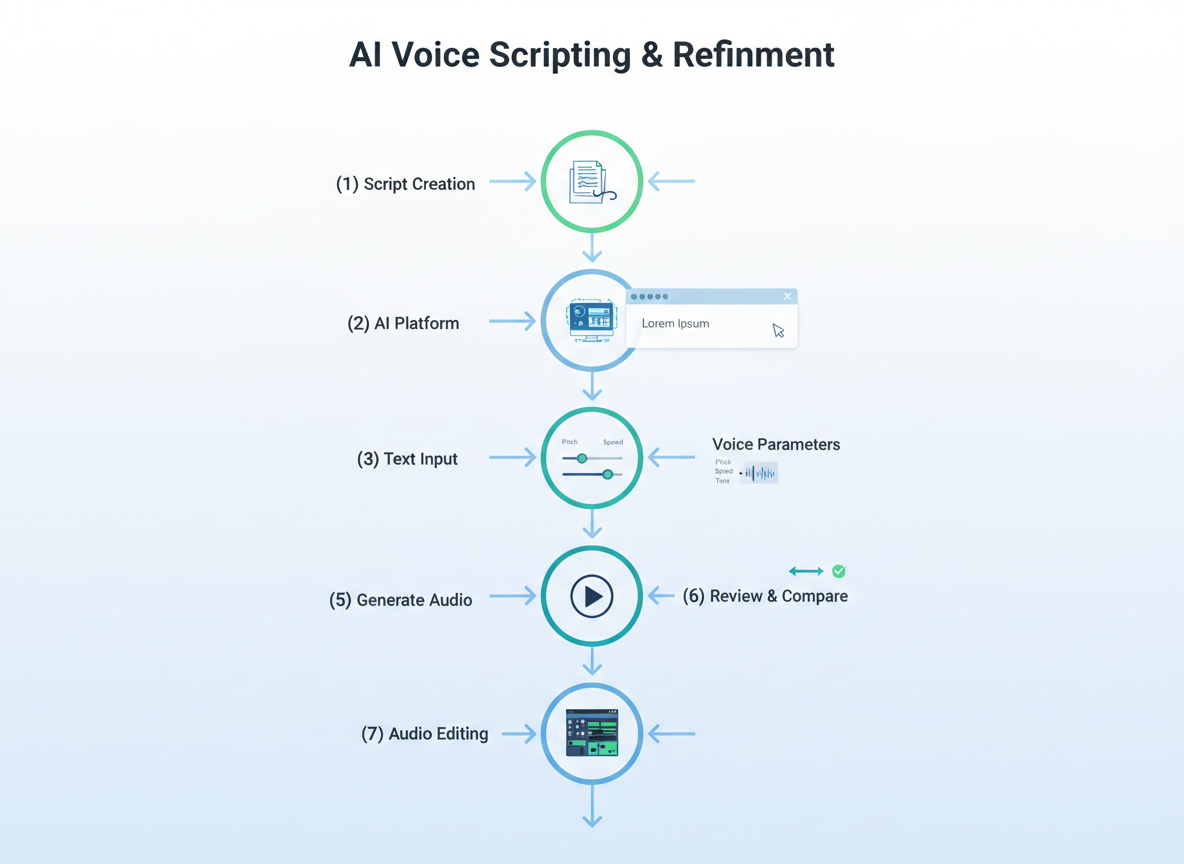
Creating a professional ai movie trailer voice isn't rocket science, but it's not just typing words into a box either. Here's exactly how to craft trailer voiceovers that'll make your clients forget about those $5,000 studio sessions.
Step 1: Script Preparation and Optimization for Trailer Format
Your script needs to breathe. Movie trailers work in beats—setup, tension, climax. Write in short, punchy sentences that create natural pauses. Remove filler words like "very" or "really." Each line should pack a punch.
Here's what works: "In a world... pause ...where nothing is as it seems... pause ...one man... will change everything."
Not this: "In a world where absolutely nothing is quite what it initially appears to be, there's one man who will make some significant changes."
See the difference? The first has rhythm. The second sounds like a committee wrote it.
Step 2: Selecting the Right AI Voice Platform and Specific Voice
Not all AI voices were created equal. You'll want a platform that offers cinematic-grade options with granular control. Look for voices labeled "dramatic," "authoritative," or "cinematic."
When choosing your specific voice, consider the trailer's genre. Action thrillers need commanding baritones. Horror trailers work best with lower, ominous tones. Rom-coms? You might actually want something warmer and more approachable.
Test three different voices with the same opening line before committing. That 30-second test could save you hours of frustration later.
Step 3: Input Your Script and Configure Initial Settings
Copy your optimized script into the platform. Set your baseline parameters: standard speed (you'll adjust this), neutral pitch, and moderate emotion intensity. Think of this as your starting point, not your finish line.
Most platforms let you mark emphasis points or insert timed pauses. Use them sparingly at first. You can always add more texture later.
Step 4: Adjusting Voice Parameters
Here's where the magic happens. Slow the pace by 10-15% for maximum dramatic impact. Trailer voiceovers feel epic because they don't rush.
Lower the pitch slightly if you're going for that classic "In a world" vibe. Raise emotional intensity at key moments—think climax lines or the title reveal.
Insert half-second pauses after setup phrases. That silence creates anticipation better than any sound effect.
Step 5: Generating Your First AI Trailer Voice
Hit generate and listen with headphones. You'll catch nuances that laptop speakers miss. Does it feel cinematic? Does it build tension? If it sounds like someone reading a grocery list, you've got work to do.
Step 6: Reviewing and Iterating for Perfection
Your first attempt probably won't be your last. That's normal. Listen for awkward pacing, unnatural emphasis, or lines that fall flat. Adjust one parameter at a time and regenerate.
Compare your AI output to actual movie trailers in the same genre. You're not copying—you're calibrating.
Step 7: Post-Processing Tips for Cinematic Sound
Raw AI output needs polish. Add subtle reverb for depth. Apply light compression to make the voice sit properly in your mix. EQ out any harsh frequencies around 3-5kHz.
Layer in that deep bass rumble underneath key moments. Add a slight echo on the final title reveal. These finishing touches separate amateur work from professional deliverables.
The best part? Once you've dialed in these settings for one trailer style, you've got a template. Your next project takes half the time. That's how agencies scale their ai movie trailer voice services and why you should check out the best ai voice generator options available right now.
Your competition is already doing this. Are you?
Advanced Voice Customization: Achieving That Iconic Movie Trailer Sound
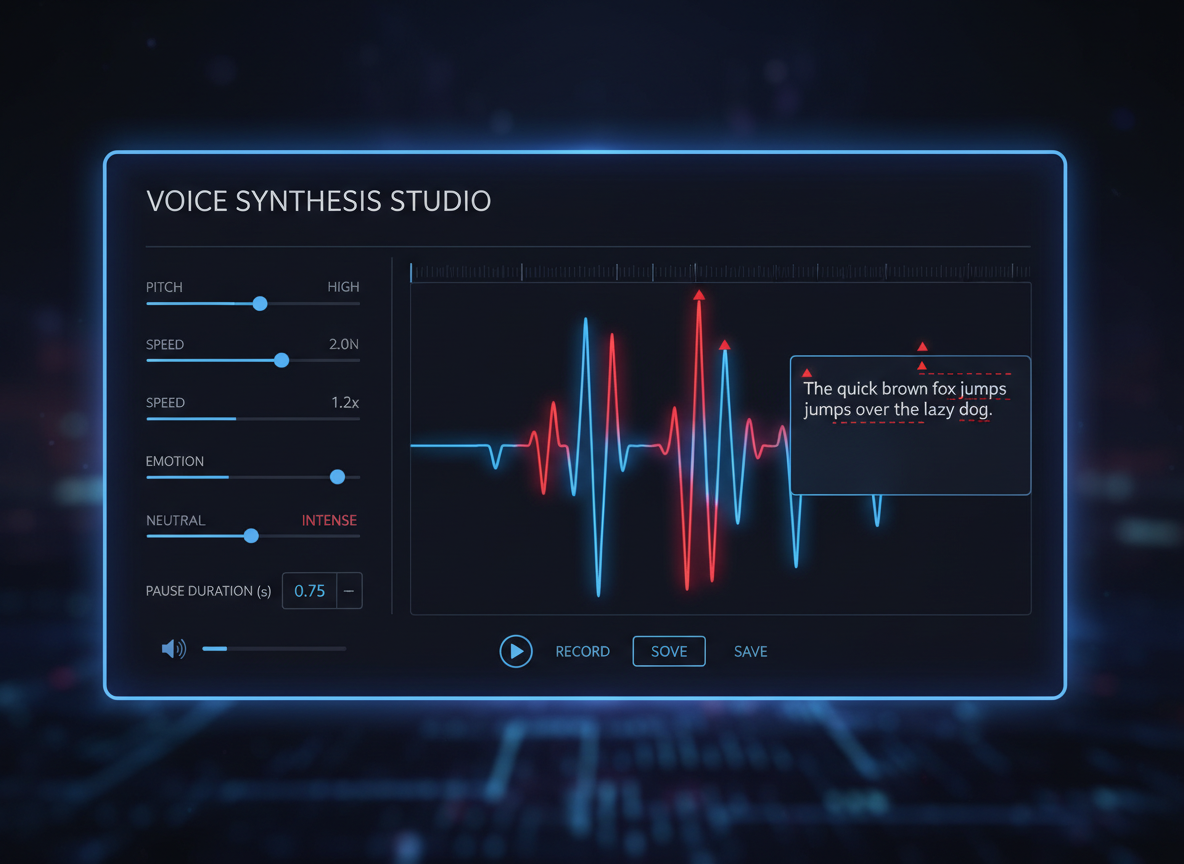
Here's where your ai movie trailer voice transforms from "pretty good" to "holy crap, how much did that cost?" The difference between amateur hour and professional-grade trailers comes down to mastering these customization techniques.
Pitch and Tone: Your Foundation
Drop the pitch 15-25% from conversational speech. That's your sweet spot for trailer authority. Think Don LaFontaine territory—deep, commanding, but not cartoonishly low. Most AI platforms let you adjust pitch in semitones or percentages. Start at -3 semitones and tweak from there.
But here's what separates the pros: tonal variation. A flat, monotone delivery kills suspense faster than spoilers on opening night. Map out your script's emotional arc. Opening line? Mysterious, slightly subdued. Building tension? Gradually increase intensity. Final tagline? Full power, maximum authority.
Pacing and Rhythm: The Pulse of Suspense
Slow. Down. Everything.
New users rush through scripts like they're reading terms and conditions. Professional trailers breathe. Your first act should run about 40% slower than normal speech. This creates anticipation, gives viewers time to process visuals, and builds that cinematic weight.
Here's a money technique: the "three-beat rhythm." Deliver information in groups of three with strategic pauses. "One man. One mission. One chance." Each phrase gets roughly equal time, with half-second gaps between them. It's hypnotic.
Strategic Pause Placement
Pauses aren't dead space—they're weapons. Insert 0.5-1 second pauses before revealing key information. "In a world where trust is extinct... [pause] ...one detective will discover the truth." That pause does the heavy lifting. It builds anticipation, lets the music swell, and amplifies the payoff.
Pro move: use extended pauses (1.5-2 seconds) before your final tagline. The silence becomes almost uncomfortable, then—boom—you hit them with your hook.
Emphasis and Inflection Control
Modern AI platforms let you mark specific words for emphasis. Don't go overboard. In a 30-second trailer, emphasize 4-6 words maximum. Choose power words: "discover," "unleash," "survive," "destiny."
For that iconic "In a world..." quality, you'll want rising inflection on setup phrases and falling inflection on payoffs. "When everything you love is threatened [rising]... you fight back [falling]."
Layering and Effects
Raw AI output needs polish. Add subtle reverb (15-20% wet mix) for that theater-hall presence. Light compression evens out dynamics and adds punch. Some pros layer two slightly different takes at 70/30 volume ratio for extra depth and richness.
The secret sauce? Consistency settings. Lock in your voice stability at 80-85% to maintain that signature sound across multiple takes. You're building a brand voice here, and every trailer should feel unmistakably yours.
Post-Processing Your AI Trailer Voice for Cinematic Quality
Here's the harsh truth: raw AI movie trailer voice output won't cut it professionally. You're competing against studios that've spent decades perfecting their sound. The good news? Post-processing transforms adequate AI voiceovers into Hollywood-grade assets—and you can master it faster than you think.
Essential Software That Actually Matters
Adobe Audition remains the industry standard for trailer work, but don't sleep on Audacity if you're bootstrapping. Izotope RX handles noise reduction better than anything else on the market. Pro Tools works if you're already invested in their ecosystem, but honestly? Most agencies crushing it with AI trailer voices stick with Audition's spectral editing capabilities.
EQ Adjustments for That Signature Authority
Boost frequencies around 120-150 Hz for chest-thumping power. Cut muddy mid-range around 300-400 Hz that makes voices sound amateurish. Add a subtle shelf boost around 5-8 kHz for presence and intelligibility. That high-end clarity separates bedroom productions from theatrical releases.
Compression: Your Volume Control Superpower
Set your compressor ratio to 4:1 with a medium-fast attack and release. This keeps explosive moments from destroying eardrums while bringing whispered intensity forward. Multi-band compression handles different frequency ranges independently—essential when you're mixing dramatic narration with explosive sound design.
Creating Dimensional Space
Here's where trailers come alive. Add a tight room reverb (0.5-1.0 second decay) to create natural presence without washing out clarity. Layer subtle room tone underneath—complete silence sounds weird and fake. Your audience should feel like they're in a theater, not a recording booth.
De-Essing and Noise Cleanup
Those harsh "S" sounds? De-esser set around 6-8 kHz fixes them instantly. Run Izotope's noise reduction on a conservative setting—too aggressive and you'll get that underwater robot sound. Remove mouth clicks manually. They're distracting and scream "amateur production."
Mixing With Music and Effects
Duck your voiceover slightly louder than background music—typically 3-6 dB difference. Use sidechain compression so music breathes around dialogue. Add sound effects that complement, not compete. Mix at -6 dB to leave headroom for mastering.
Final Mastering for Platform Delivery
Master to -14 LUFS for streaming platforms, -3 dB true peak. Export WAV files for archival, high-quality MP3s for quick delivery. Different platforms have different specs—YouTube needs different mastering than theatrical DCP files.
Fatal Mistakes Killing Your Projects
Over-processing destroys natural qualities. Skipping reference tracks means you're guessing. Ignoring mono compatibility makes your trailer sound terrible on phones. Not backing up session files? You're one crash away from redoing everything.
Real-World Case Studies: Successful AI-Generated Movie Trailers
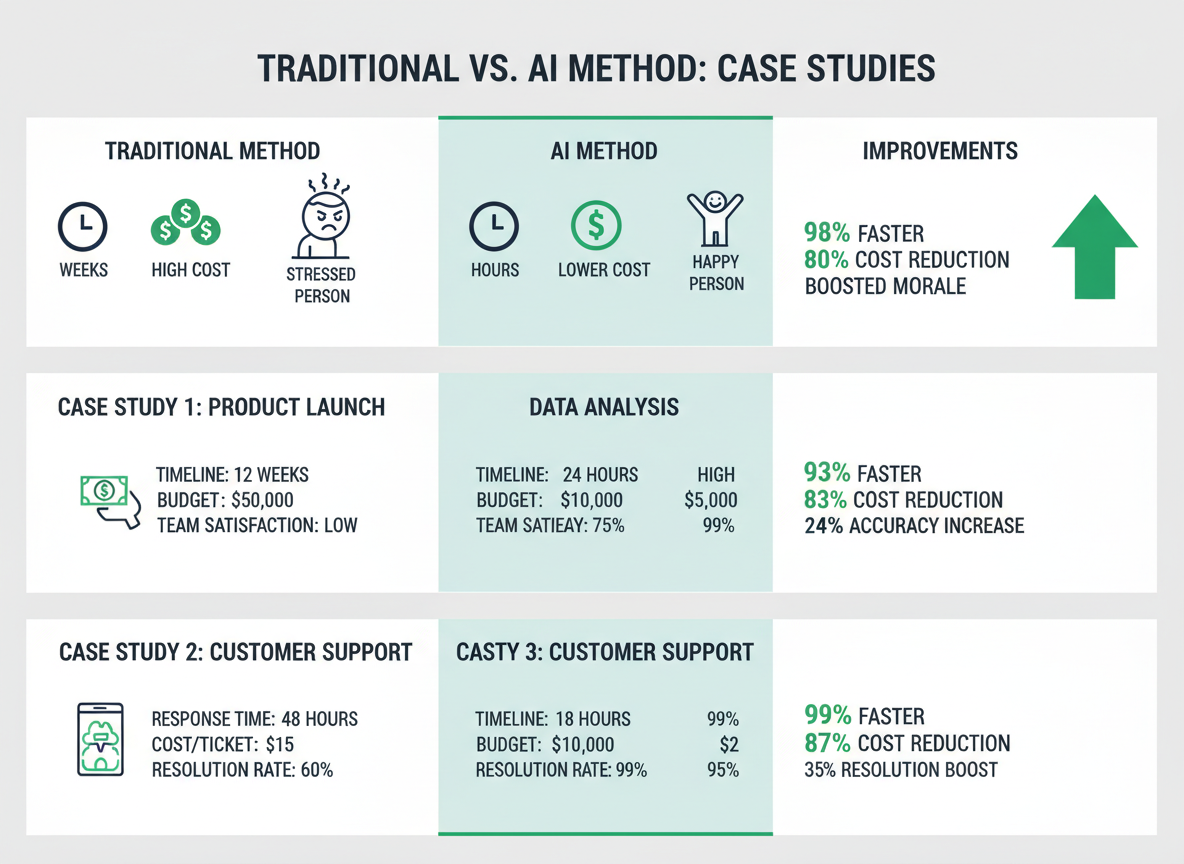
Let's stop talking theory and look at what's actually working in the market right now.
Case Study #1: "Echoes of Tomorrow" - The Indie Film That Couldn't Afford NOT to Use AI
Sarah Chen's sci-fi thriller had a $40,000 total budget. Traditional trailer voiceover quotes? Between $2,500-$5,000 for a single read. She went with an ai movie trailer voice instead and spent $147.
The results hit differently than anyone expected. Her trailer pulled 127,000 views in the first week on YouTube, with a 4.2% click-through rate to her crowdfunding campaign. Comments praised the "epic voice that sounds like a real trailer." Sarah raised $89,000—more than double her initial film budget.
Production time? Six hours from script to final mix. She tested five different AI voices, tweaked the pacing herself, and delivered a polished trailer without booking studio time or coordinating with talent agents.
Case Study #2: Momentum Media's Client Acquisition Machine
This Portland-based agency added AI voiceover services in Q2 2025. They weren't replacing their entire workflow—they got strategic about it.
For client video promos under $3,000, they switched to AI voices exclusively. The numbers transformed their margins: traditional voice talent cost them $400-$800 per project. AI brought that down to roughly $50-$75.
They onboarded 23 new clients in eight months, specifically targeting local businesses who'd never considered video marketing because of cost barriers. Average project value: $1,800. Their effective profit margin jumped from 38% to 61% on these smaller projects.
Client satisfaction scores? Actually increased. Revisions became instantaneous instead of requiring talent callbacks and studio rebooking.
Case Study #3: The Viral Fan Trailer That Changed Everything
Marcus Rodriguez creates movie concept trailers on YouTube. His "Blade Runner 2099" fan trailer using an AI movie trailer voice hit 2.3 million views in three weeks.
Here's what made it work: he didn't try hiding the AI voice. Instead, he leaned into creating something that sounded professionally cinematic. The voice matched the visuals perfectly because he could iterate endlessly without watching his budget evaporate.
Production time: four days from concept to upload. Cost: $89 for the AI voice platform subscription. His channel gained 47,000 subscribers from that single video.
Traditional approach would've cost him $1,500-$3,000 minimum and required weeks of coordination. He wouldn't have made the video at all.
The ROI Reality Check
Across these three case studies, the pattern's clear:
Cost savings: 85-95% compared to traditional voice talent
Production time: 70-90% faster from concept to delivery
Revision cycles: Nearly instantaneous vs. days or weeks
Market entry barriers: Eliminated for smaller players
The agencies and creators who've figured this out aren't waiting around. They're capturing market share while others debate whether AI voices sound "good enough." Spoiler: your audience already thinks they do.
Templates & Prompts: Movie Trailer Scripts for Different Styles
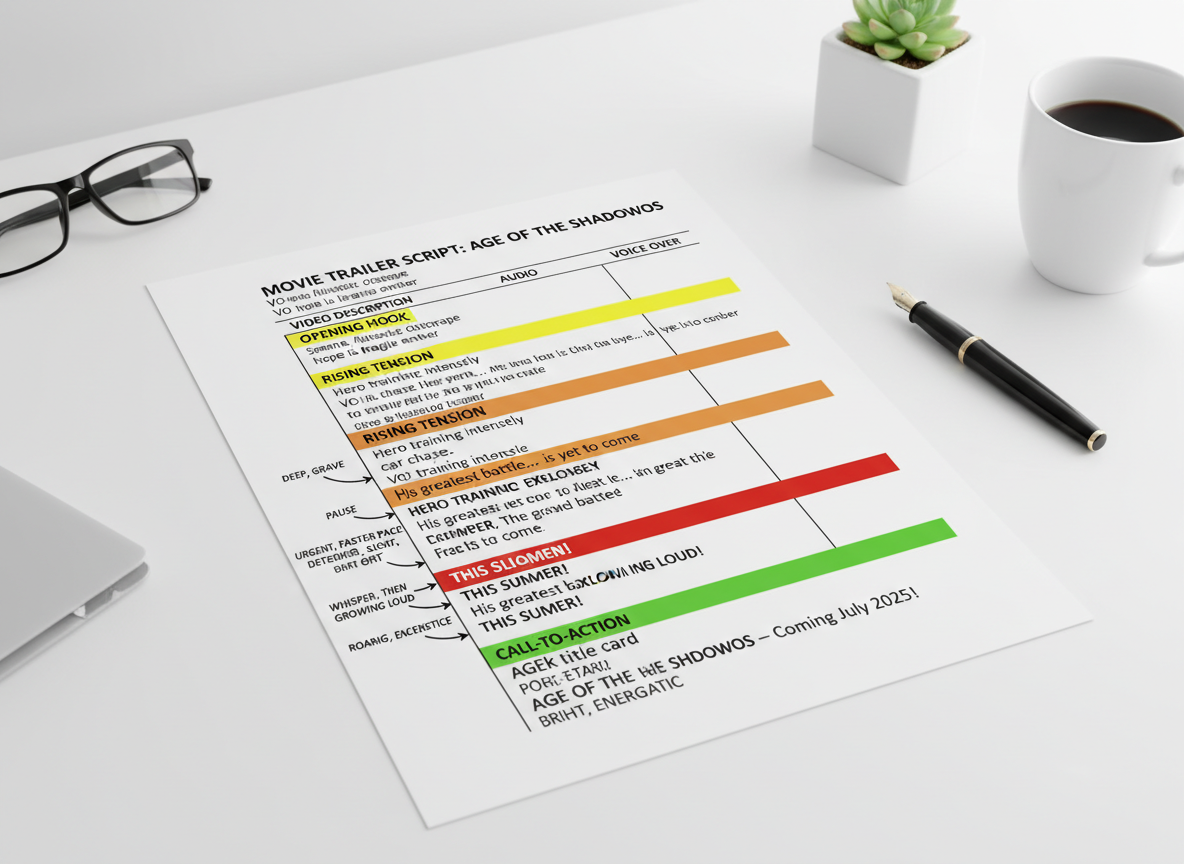
Writing for AI movie trailer voices isn't the same as writing for human voiceover artists. You're working with technology that thrives on specific patterns, clear direction, and well-structured prompts. Get this right, and you'll command premium rates from clients who need compelling trailer content yesterday.
Action Movie Trailer Script Template
Here's what converts viewers into ticket buyers:
``` [Deep, gravelly tone] In a world torn apart by chaos... [Pause: 0.5 seconds] [Rising intensity] One man stands between salvation and total destruction. [Quick cut - energetic] They said it couldn't be done. [Aggressive, commanding] They were WRONG. [Dramatic pause: 1 second] [Explosive finish] This summer... the fight comes home. ```
Notice the voice direction notes? They're gold for AI processing. Specify tone, pacing, and emotional intensity. Your AI movie trailer voice needs these markers to deliver cinematic results.
Drama/Emotional Trailer Framework
Drama requires restraint and build:
``` [Soft, intimate] Sometimes the hardest battles... [Gentle pause] [Building emotion] ...are the ones we fight within ourselves. [Warm, compassionate] A story of redemption. Of second chances. [Hopeful crescendo] Of finding light in the darkest places. ```
Horror/Thriller Script Approach
Fear sells. Here's the structure that works:
Start whisper-quiet. Build dread through repetition and pauses. Use staccato delivery for key phrases: "They're. Already. Here." End with a shocking revelation that drops to silence before the title card.
Comedy Trailer Scripts
Comedy's tricky with AI voices, but doable. Use punchy rhythm, exaggerated enthusiasm, and strategic pauses for comedic timing. Think upbeat announcer style with self-aware winks at trailer conventions.
Documentary-Style Template
``` [Authoritative, measured] What if everything you knew...was a lie? [Thoughtful pause] [Investigative tone] For twenty years, the truth remained hidden. [Building urgency] Until now. ```
Teaser vs. Full Trailer Differences
Teasers run 30-45 seconds. Focus on atmosphere and intrigue, not plot. Use fragments. Create questions. Full trailers need structure: setup (15 seconds), conflict (30 seconds), escalation (20 seconds), climax tease (10 seconds).
Power Words for AI Voices
These consistently perform: "Witness." "Discover." "Unleash." "Shattered." "Unforgettable." "Beyond." AI voices handle strong consonants and dramatic vowels exceptionally well.
Maximizing AI Performance
Write phonetically challenging words differently. "Extraordinary" becomes "extra-ordinary" in your prompt. Include pronunciation guides for character names. Specify exactly where you want breath sounds or dramatic pauses.
The agencies making serious money right now aren't just using AI—they're mastering the craft of writing specifically for it. This same principle applies whether you're creating content for ai for podcasts or blockbuster trailers.
Your competition's still writing scripts like it's 2015. You're writing for the technology that's eating their lunch.
Pricing Breakdown: What AI Movie Trailer Voices Actually Cost
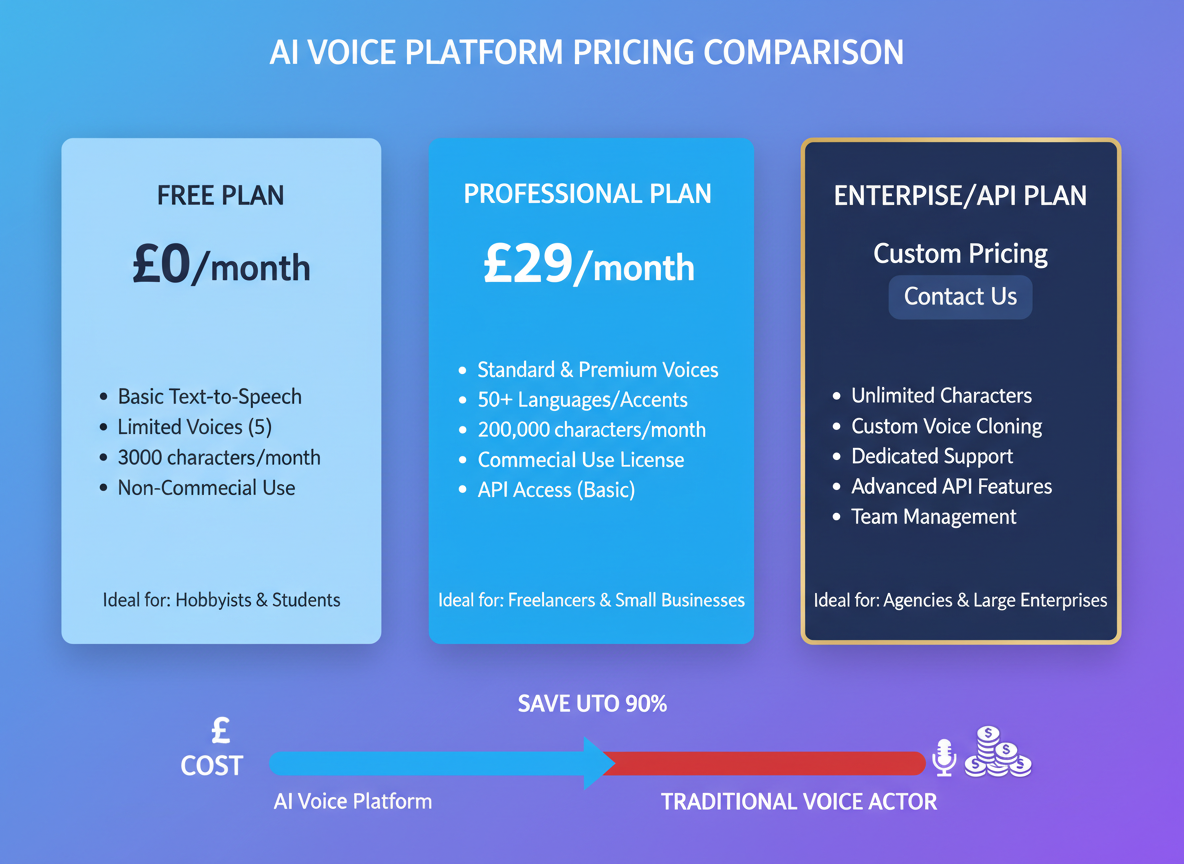
Here's what nobody tells you: the pricing landscape for ai movie trailer voice technology is wildly inconsistent, and that's actually your advantage as a service provider.
Most platforms offer free tiers that'll get you started—but they're deliberately limited. You're typically looking at 2,000-5,000 characters per month, watermarked outputs, and restricted commercial use. Fine for testing, but you can't build a real business on them.
The Real Numbers Behind Paid Plans
Mid-tier subscriptions run $25-50 monthly and unlock 300,000-500,000 characters. That translates to roughly 20-30 minutes of finished audio, depending on pacing. Premium tiers ($50-100/month) usually double those limits and add priority processing.
Here's where it gets interesting for agencies: most platforms charge per character, not per minute. A 60-second movie trailer might contain 150-200 words (around 750-1,000 characters including spaces). Do the math—you could generate 300-400 trailer drafts monthly on a $50 plan.
Commercial Rights Matter More Than You Think
Read those terms of service carefully. Some platforms let you use AI-generated voices commercially on their basic plans. Others require enterprise licensing that starts at $300+ monthly. If you're creating content for clients, this isn't optional—it's legal protection.
API access changes everything for freelancers running volume. Pricing typically shifts to pay-per-use: $0.15-0.30 per 1,000 characters. If you're processing client work systematically through PodGorilla or similar workflow tools, APIs let you scale without hitting subscription caps.
The Professional Voice Actor Comparison
A human voice actor charges $250-500 for a movie trailer (union rates can hit $2,000+). They'll need direction, possibly multiple takes, and 24-48 hour turnaround. Your AI voice costs maybe $2 in platform credits, takes ten minutes, and you can iterate endlessly.
Hidden Costs You're Not Calculating
Don't forget audio editing software ($20-50/month for decent options), sound effects libraries ($15-30/month), and background music licensing ($50-200 per track for commercial projects). These stack up quickly.
The ROI Reality Check
If you're charging clients $300-500 per trailer (market rate for quick-turnaround work), your total monthly overhead might be $150-200 in tools and licensing. Land three clients, and you're profitable. Land ten, and you're building something serious. The margins here are absurd compared to traditional video production services.
How Agencies and Freelancers Are Monetizing AI Movie Trailer Voices
The money's flowing right now, and most service providers haven't even noticed the opportunity sitting in front of them.
Agencies are packaging AI movie trailer voice services at premium rates—$500 to $2,000 per trailer, depending on length and complexity. That's not chump change. And here's the kicker: your actual production time? Maybe 30 minutes once you've got your workflow dialed in.
Service Packaging That Converts
Smart agencies aren't selling "AI voiceovers." They're selling "cinematic trailer production packages." The difference matters. Your clients don't want AI anything—they want results that make their content stand out. Package it with sound design, music licensing consultation, and script optimization. Suddenly, you're not competing on price. You're the full-service solution.
Consider tiered packages: Basic ($497) gets them one 60-second trailer with two revision rounds. Professional ($997) includes three trailer variations, custom script punch-up, and priority turnaround. Enterprise ($1,997+) adds monthly trailer creation, brand voice consistency, and unlimited revisions. You're building value ladders, not hourly rate traps.
Your Target Clients Are Everywhere
Independent filmmakers need trailers yesterday. YouTube creators launching documentaries can't afford $3,000 voice talent. Real estate agencies want property showcase videos with that cinematic edge. Corporate training departments need internal hype videos. SaaS companies launching products want announcement trailers that don't sound like every other tech startup.
The beauty? These clients already have budgets. They're just redistributing money they would've spent elsewhere.
Recurring Revenue Changes Everything
Monthly packages transform your cash flow. Lock in clients at $1,497/month for four trailers. That's one signature away from $17,964 in annual recurring revenue per client. Get ten clients? You're looking at nearly $180K yearly from this single service line.
This works brilliantly if you start a podcast production agency—your podcast clients need episode trailers, season promos, and social media teasers. Cross-selling becomes effortless.
Competitive Advantages You Can't Ignore
Traditional voiceover artists need scheduling, back-and-forth communication, and days of turnaround time. You're delivering in hours. They charge $500 for a single read. You're offering unlimited revisions at no extra cost because it takes you three clicks.
Speed wins contracts. When a filmmaker needs a trailer for a festival submission deadline that's two days away, you're the only call they can make.
Upselling and Service Bundling
Every trailer client needs related services. Script writing. Video editing. Social media cut-downs. Promotional graphics. Distribution strategy. You're not leaving money on the table when the client's already said yes to working with you.
Bundle AI trailer voices with video production packages. Add it to existing content marketing retainers. Position it as the "cinematic upgrade" for podcast promotion, online courses, or webinar replays.
The infrastructure's already built. The clients are already searching. You just need to show up with the offer.
Technical Specifications: Voice Parameters for Cinematic Sound
Here's what separates amateur AI movie trailer voice outputs from professional-grade cinematic audio: the technical specs you choose before hitting generate.
Start with your foundation. You'll want 44.1kHz sample rate minimum—that's CD quality. But if you're delivering to high-end clients or theatrical distributors? Go 48kHz or higher. It's the broadcast standard, and it gives you headroom for post-production magic. Pair that with 24-bit depth instead of 16-bit. The difference shows up in those quiet, tension-building moments where every whisper counts.
Voice stability settings control consistency. Set it low (around 30-40%) and you get predictable, uniform delivery—perfect for corporate trailers or controlled narration. Crank it higher (70-80%) and the AI introduces natural variation, emotional peaks, and human-like unpredictability. Action trailers benefit from higher variability. Drama? Keep it stable.
The similarity boost parameter deserves your attention. This slider determines how closely the AI matches your reference voice. At 50-60%, you get interpretation. At 85-95%, you get near-cloning. Most professional applications land around 75%—close enough for consistency, flexible enough for emotion.
Style exaggeration amplifies dramatic elements. Think of it as the "Hollywood" dial. Higher settings push emotional intensity, emphasize power words, and create that larger-than-life quality. But be careful—too much becomes parody. Start at 40% and adjust based on your trailer's tone.
Speaker boost sharpens clarity and presence, cutting through music and sound effects. It's your secret weapon for trailer mixes where voice competes with orchestral scores. Set it between 60-80% for most applications.
Export as uncompressed WAV files (24-bit, 48kHz) for editing. That's your master. Convert to 320kbps MP3 only for client previews or web delivery. File sizes? A 90-second WAV trailer voice typically runs 15-25MB—manageable for any platform.
For developers automating workflows, these parameters translate directly to API calls. You're controlling `stability`, `similarity_boost`, `style`, and `speaker_boost` values programmatically. String them together, and you've built a production pipeline that generates cinematic voiceovers at scale.
The technical foundation you set now determines whether your AI movie trailer voice sounds like a YouTube throwaway or a million-dollar campaign.
Common Mistakes to Avoid When Creating AI Movie Trailer Voices
Most people who fail at creating professional AI movie trailer voice content make the same seven mistakes. Here's what's killing your results—and how to fix it.
Mistake 1: Choosing the wrong voice for your genre
Your AI movie trailer voice needs to match the emotional tone of your project. A lighthearted comedy doesn't need a deep, menacing narrator. Horror films shouldn't sound cheerful. Romance trailers require warmth, not aggression. Test your chosen voice against reference trailers in your genre before committing. What works for action won't work for drama.
Mistake 2: Over-processing and losing natural quality
Adding too many effects makes your voiceover sound robotic and artificial. Yes, you'll want some reverb and compression, but excessive processing destroys the human-like qualities that make modern AI voices compelling. Keep your effects subtle. If you can't recognize the original voice character, you've gone too far.
Mistake 3: Ignoring pacing and dramatic pauses
Timing separates amateur trailers from professional work. The best AI movie trailer voice delivery uses strategic pauses to build tension and emphasize key moments. Don't rush through your script. Add pause markers between scenes, let emotional beats breathe, and give viewers time to absorb information. Speed kills impact.
Mistake 4: Poor script writing that doesn't suit AI delivery
Even the best AI voices struggle with overly complex sentences, awkward phrasing, or unnatural dialogue. Write specifically for voice delivery. Use short, punchy sentences. Avoid tongue-twisters and word combinations that create weird inflections. Read your script aloud before generating audio.
Mistake 5: Skipping post-production enhancement
Raw AI output rarely sounds finished. You'll need equalization to add warmth, compression for consistency, and subtle effects for that cinematic feel. Budget time for audio editing. The difference between acceptable and exceptional often happens in post-production.
Mistake 6: Not testing multiple voice options
The first voice you try won't always be the winner. Generate samples with at least three different voices before deciding. Sometimes a voice that seems perfect initially loses its appeal after multiple listens. Give yourself options.
Mistake 7: Forgetting commercial usage rights
Not all AI voice platforms allow commercial use at every pricing tier. Review licensing terms carefully before using AI-generated voiceovers in client projects or monetized content. Getting this wrong can create legal headaches and damage your reputation.
Troubleshooting common quality issues: If your output sounds muffled, boost high frequencies around 8-12kHz. Robotic delivery? Check your script for unnatural phrasing. Background noise? Apply gentle noise reduction. Inconsistent volume? Add compression with a 3:1 ratio.
The Future of AI Movie Trailer Voices: What's Coming in 2026 and Beyond
We're standing at the edge of something massive. The AI movie trailer voice technology available today? It'll look primitive compared to what's rolling out over the next 12-24 months.
Real-time voice generation is already breaking through. Instead of generating a voiceover and hoping it sounds right, you'll tweak emotion, pacing, and intensity with sliders while hearing changes instantly. Think of it like adjusting EQ on an audio track, except you're controlling dramatic tension, urgency, and emotional resonance. That's not science fiction—it's in beta testing right now.
The emotion control capabilities coming in 2026 will blow your mind. Current AI voices can sound happy or serious. Next-generation systems will nail micro-emotions: skepticism, building dread, breathless excitement, or that specific tone of voice when revealing a plot twist. You'll direct AI performances like you'd work with a human voice actor, except you'll get it perfect on the first take.
Here's where it gets wild: voice cloning technology has evolved beyond simple imitation. Celebrity-style trailer voices will become accessible without hiring the celebrity. Want that iconic "In a world..." sound without the Hollywood price tag? You'll synthesize it. Legally and ethically, there's still territory to navigate here, but the technical barriers have collapsed.
Software integration is accelerating fast. Major video editing platforms are already embedding AI voice generation directly into their workflows. You won't export to a separate tool anymore. Record, edit, and generate your ai movie trailer voice without leaving Premiere or Final Cut. The friction is disappearing.
Multi-language capabilities are exploding. Generate the same trailer voice in 40 languages simultaneously, maintaining tonal consistency across markets. Global campaigns that used to cost tens of thousands will cost hundreds.
Here's the uncomfortable truth: agencies adopting this technology in 2026 will dominate their markets by 2027. The gap between early adopters and laggards won't be six months—it'll be measured in years of lost revenue and client relationships.
Companies still outsourcing traditional voiceover work will watch their margins evaporate while you're delivering studio-quality results in minutes. The window to establish yourself as the go-to expert in your market is closing faster than most people realize.
Getting Started Today: Your Action Plan for AI Movie Trailer Voices
You've seen what's possible. AI movie trailer voice technology isn't coming—it's already disrupting how content gets produced. While most agencies are still cold-calling voice actors and managing revision nightmares, early adopters are banking five-figure trailer voice projects with turnaround times measured in hours, not days.
Here's your roadmap to start today:
Immediate Next Steps
Pick one AI voice platform and create your first test trailer this week. Don't overthink it. Start with a 30-second concept trailer for a fictional action film or documentary. You'll learn more in two hours of hands-on creation than reading a dozen tutorials.
Your First Project Should Be Internal
Create a promotional trailer for your own business. Seriously. Use it as proof-of-concept while learning the tools. Marketing agencies can showcase their new service capabilities. Consultants can add cinematic credibility to their offerings. You're building portfolio material while mastering the technology.
Investment Reality Check
You're looking at $50-200/month for professional-tier AI voice access. That's it. Compare that to a single professional voice actor booking ($500-2,000 per project) and you'll cover costs with your first client. Time investment? You'll nail basic trailer creation in under ten hours of practice.
Adding This to Your Service Stack
Position AI trailer voices alongside video production, podcast automation software, or content marketing services. Bundle it with existing offerings—clients buying video packages will gladly pay extra for cinematic voiceovers that sound premium.
The window's open right now. By 2027, everyone will be doing this. The agencies winning six-figure contracts today are the ones who mastered AI voice before it became standard. You've got maybe twelve months before this shifts from competitive advantage to table stakes.
Start tonight. Create one practice trailer. Then price your first package.
Frequently Asked Questions
Can AI voices really sound as good as professional voice actors for movie trailers?
Yes, and sometimes they're better for certain applications. Top-tier AI voices now capture the gravelly intensity, dramatic pauses, and emotional range that made legends like Don LaFontaine famous. You won't fool seasoned audio engineers in every case, but for most commercial projects, clients can't tell the difference. The real advantage? You get consistency across 47 takes without a single voice crack or scheduling headache.
What is the best AI voice for creating movie trailer narration?
ElevenLabs dominates this space with voices specifically designed for cinematic narration. Their "Adam" and "Marcus" voices deliver that classic thriller tone, while "Antoni" works beautifully for documentary-style trailers. Play.ht's "Thom" voice nails the action-packed intensity. The secret isn't finding one "best" voice—it's matching the voice to your trailer's genre and emotional arc.
How much does it cost to create an AI movie trailer voice?
You're looking at $5-99 monthly for subscription-based platforms depending on usage. ElevenLabs starts at $5/month for 30,000 characters (roughly 15-20 short trailers). Professional-tier plans run $99-330/month with commercial licensing included. Compare that to hiring a pro voice actor at $500-3,000 per trailer, and you'll see why agencies are jumping on this opportunity.
Do I need special equipment to create AI movie trailer voices?
Nope. You need a computer, internet connection, and maybe $50 for basic audio editing software (though free options like Audacity work fine). The AI handles the heavy lifting. You're not recording in a sound booth—you're typing scripts and downloading studio-quality files. Total barrier to entry: practically zero.
Can I use AI-generated trailer voices for commercial projects?
Absolutely, but check your platform's licensing terms. Most paid plans include full commercial rights. ElevenLabs Professional and Scale plans cover you for client work completely. Free tiers usually restrict commercial use. Always verify before selling services to clients—the last thing you need is a licensing dispute when you're scaling your agency.
How long does it take to create a movie trailer voiceover with AI?
Minutes, not days. Script to finished audio? Fifteen minutes for a standard 60-90 second trailer. That includes tweaking pronunciation, adjusting pacing, and maybe regenerating a line or two. Traditional workflow with voice actors? Factor in casting (days), scheduling (weeks), recording sessions, and revisions. AI compresses weeks into an afternoon.
Can I clone my own voice or a celebrity voice for movie trailers?
You can clone your voice with about 30 minutes of clean audio samples. Celebrity voices? Legally, that's a minefield you don't want to walk through. Platforms explicitly prohibit cloning voices without consent. Focus on the extensive professional voice libraries available—they're designed for this exact purpose and won't land you in legal trouble.
Do AI movie trailer voices work for different languages?
They're getting scary good at multilingual content. ElevenLabs supports 29+ languages with native-sounding pronunciation. You can create Spanish thriller trailers, French documentary narration, or German action promos without hiring multiple voice actors. The market opportunity here? Agencies charging premium rates for localized trailer production while spending minutes on creation.
How can agencies and freelancers make money offering AI trailer voice services?
Package it as a premium service at $300-1,200 per trailer while your costs stay under $50. Target indie filmmakers, YouTube creators, corporate video producers, and small production houses. Bundle trailer voiceovers with video editing services for $1,500-3,000 complete packages. Smart freelancers are already billing $5,000+ monthly offering this single service.